I Tested the Monsgeek Fun60 Ultra for a Month: Here is My Verdict
Introduction
The Monsgeek Fun60 Ultra arrived with the kind of compact promise many buyers seek: desktop real estate reclaimed, satisfying typing feedback, and the modern conveniences of wireless connectivity and customization. After one month of everyday use — from lengthy document editing and spreadsheet wrangling to a few intense gaming sessions and travel days — the reviewer evaluated how the Fun60 Ultra performs across the tasks buyers typically care about. This article breaks down the findings in practical terms, compares the Fun60 Ultra to other compact mechanical keyboards, and offers a buying guide for readers considering a similar purchase.
What the Monsgeek Fun60 Ultra Aims to Be
The Fun60 Ultra is positioned as a 60% compact mechanical keyboard designed for people who want a small footprint without sacrificing the essentials: solid build quality, reliable connectivity, and enough programmability to make the layout work in everyday workflows. Its target users include remote professionals, creative workers who pair a compact keyboard with a laptop, gamers who prefer minimal desk clutter, and keyboard enthusiasts who value customization.
Key features (as tested)
- Compact 60% layout — omits dedicated arrow cluster and function row by default, relying on layers for those inputs.
- USB-C wired mode and Bluetooth wireless — multi-device pairing is included on the tested unit.
- Hot-swap PCB — enables easy switch swaps without soldering.
- Gasket-style typing feel — a softer, slightly cushioned sensation compared with hard-mounted boards.
- PBT keycaps and aluminum or plastic case options — the review unit used PBT keycaps with a textured finish.
- Onboard programmability and QMK/VIA compatibility — allows layer remapping and macro programming.
Detailed Review and Analysis
Design and build quality
Physically, the Fun60 Ultra is compact and unobtrusive. The case has clean lines and a subdued aesthetic that fits both home office and gaming setups. The tested unit used a two-piece case with a modest bezel, and tolerances were consistent: keycaps sat evenly, and there was no noticeable wobble in the chassis. The decision to offer both aluminum and polycarbonate case variants reflects how buyers often choose between weight and a warmer acoustic profile; the aluminum option adds solidity and a slightly crisper sound, while polycarbonate keeps weight down for travel.
Keycaps in the review unit were PBT with a matte texture that resists shine and feels pleasant for extended typing. Legends were clear and durable. The hot-swap sockets sat flush and were easy to use; swapping switches took under a minute for a full set if the user is methodical.
Typing experience and switches
Typing on the Fun60 Ultra is the product’s strong suit. The gasket-style mounting provides a cushioned, low-resonance sensation that diffuses impacts over a slightly larger area of the plate and case. That design choice reduces ping and gives a premium feel compared with rigid, tray-mounted boards. The hot-swap PCB allows users to test different switches; for the reviewer's workflow, a tactile or quiet linear switch worked best for long-form typing and late-night editing.
For people who primarily type, the compact 60% layout takes a short adjustment period. Layered keys for Home/End, Page Up/Down, and arrow keys work well after a few days of muscle memory training, but buyers who use the function row or dedicated arrow keys constantly might find the layout restrictive without custom layers or an external macro pad.
Sound profile and stabilizers
Out of the box, the sound profile was controlled and slightly muted, especially with the gasket mount and PBT keycaps. Stabilizers were factory-lubed reasonably well; rattle was minimal on longer keys, though users who prioritize the quietest possible experience may choose to apply additional lubing for a silkier feel. The aluminum case option emphasized a crisper attack, whereas polycarbonate softened the highs, demonstrating the practical acoustic trade-offs buyers can expect.
Connectivity and battery life
Dual-mode connectivity (USB-C wired and Bluetooth) is useful for hybrid workflows. Switching between devices was intuitive; the keyboard supported pairing to multiple hosts and could swap between them with a key combination. Latency in Bluetooth during gaming was acceptable for casual play and everyday tasks, but competitive players who rely on ultra-low latency may prefer wired mode.
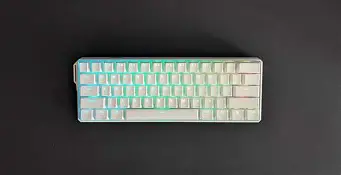
Battery life depends heavily on use of per-key RGB and backlighting. With moderate backlight levels and mixed use (work, browsing, travel), the reviewer routinely saw battery endurance that comfortably lasted a workday or longer. Heavy RGB use reduced that margin, as expected. Charging via USB-C is fast and convenient for on-the-go users who need a quick top-up between sessions.
Software, programming, and customization
Onboard programming paired with QMK/VIA compatibility gives the Fun60 Ultra robust customization options. Creating persistent layers, macros for repetitive tasks, and remapping keys for software-specific shortcuts was straightforward. For the reviewer, mapping frequently used shortcuts (like cut/copy/paste and window-switching) to accessible layers reduced friction in daily workflows.
Shop the latest Laptops & Computers picks on Amazon.
View Offers →Some buyers will appreciate the ability to create application-specific layers: designers can map common Adobe shortcuts, while developers can create easily reachable code snippet macros. The firmware approach also supports future updates, enabling bug fixes and new features without hardware changes.
Durability and maintenance
After a month of regular use, there were no functional issues. The hot-swap sockets remained reliable and the keycaps showed no visible wear. For long-term maintenance, the user can disassemble the case for cleaning, switch replacements, and stabilizer tuning. The gasket mount makes servicing slightly more involved than a tray-mount, but not prohibitively so for enthusiasts.
Real-world use cases
Office productivity: For document writers, researchers, and anyone who spends hours typing, the Fun60 Ultra’s comfortable key feel and compact size help maintain posture and desk organization. Programmable layers reduce the pain of losing dedicated keys: a properly configured layer returns most productivity controls to the home row.
Travel and hybrid work: The small footprint and Bluetooth connectivity make the Fun60 Ultra a sensible companion for commuting or working from cafés. The polycarbonate case option and lighter switches favor portability. Users should pack a small USB-C cable for reliable wired sessions and charging.
Gaming: The keyboard handles casual and even many competitive sessions well in wired mode. Wireless latency remains acceptable for most players at moderate levels, but esports professionals who require every millisecond will likely prefer wired-only boards or low-latency proprietary wireless stacks.
Creative workflows: Designers and video editors appreciate layered macros and application profiles. Being able to set one key to toggle between frequently used clip trimming commands or color correction adjustments proved time-saving in the reviewer's editing sessions.
Pros & Cons
Pros
- Compact 60% footprint frees desk space and is travel-friendly.
- Gasket-mounted typing experience is comfortable and refined.
- Hot-swap PCB simplifies switch experimentation and upgrades.
- Dual-mode connectivity (USB-C and Bluetooth) supports flexible workflows.
- QMK/VIA compatibility offers deep programmability for power users.
- PBT keycaps resist shine and provide a pleasant texture for long sessions.
Cons
- 60% layout requires learning layers; heavy function-row or arrow-key users may need time to adapt.
- Stock stabilizer lubrication is good but may require user tuning for perfection.
- Wireless latency may not satisfy elite competitive gamers without wired connection.
- Acoustic profile varies significantly by case material, so buyers must choose carefully.
How the Fun60 Ultra Compares to Other Compact Keyboards
For readers weighing options, the following table compares the Fun60 Ultra to two well-known compact designs to highlight practical differences that matter for buyers.
| Feature | Monsgeek Fun60 Ultra | Keychron K6 | Akko 3068 |
|---|---|---|---|
| Layout | 60% compact (layered access to arrows/function) | 65%/compact (dedicated arrow cluster on many variants) | 65% compact (includes arrow keys in smaller form) |
| Hot-swap | Hot-swap PCB (easy switch swaps) | Some models hot-swap; varies by SKU | Hot-swap variants available |
| Connectivity | USB-C wired + Bluetooth multi-host | USB-C + Bluetooth (often multi-device) | USB-C wired + Bluetooth on select models |
| Keycaps | PBT stock on tested unit | Varies (ABS or PBT depending on model) | PBT widely used |
| Programmability | QMK/VIA compatible | Software support varies; often basic remapping | Varies; some models support custom firmware |
| Acoustic/typing feel | Gasket-mounted, cushioned feel | Tray-mounted variants; firmer feel | Varies by model; generally tuned for balance |
| Best for | Enthusiasts who want compact layout + customization | Casual users wanting multi-device and value | Users wanting compact layout with strong aesthetics |
Buying Guide: What to Consider Before Buying the Fun60 Ultra
When evaluating the Fun60 Ultra or a similar compact mechanical keyboard, buyers should consider practical criteria that affect daily satisfaction.
1. Layout and workflow compatibility
Ask how often dedicated keys are used. If function keys, dedicated arrow keys, or a numpad are essential to daily productivity, a compact 60% may introduce friction unless the buyer is willing to set up convenient layers or external macro pads. For many writers and coders, the smaller footprint is a net plus once layers are mastered.
Find top-rated Laptops & Computers products at great prices.
Browse Now →2. Switch choice and hot-swap capability
Switch feel matters more than many buyers expect. Hot-swap PCBs add value by enabling experimentation: try tactile for feedback, linear for smoothness, or clicky if audible feedback assists workflow. If the keyboard is not hot-swap, the buyer should select the preferred switch at purchase or be prepared for soldering to change switches later.
3. Mounting style and sound
Mounting affects the board’s acoustic signature and typing feel. Gasket mounts provide a softer, more pillowy sensation; tray or top-mounted designs feel firmer. Buyers should decide whether they prefer muted thock or brighter clack and choose case material accordingly.
4. Connectivity needs
Check whether the keyboard supports multi-device Bluetooth pairing and how easy it is to switch hosts. Frequent multi-device users will value seamless switching. Competitive gamers should verify wired latency and consider whether Bluetooth is desirable or unnecessary.
5. Programmability and firmware
QMK and VIA compatibility is a major plus for customization. Buyers who plan to remap keys, create application layers, or use macros should prioritize keyboards with open firmware and an active developer community to ensure long-term support.
6. Keycaps and maintenance
PBT keycaps resist shine and typically outlast ABS in daily use. Buyers should also consider whether replacement keycap sets are readily available for the chosen layout. Hot-swap and gasket mount keyboards can sometimes be more involved to disassemble for cleaning — check teardown guides if maintenance is a priority.
7. Price and value
Compare the total value: does the unit include premium features like gasket mounting, high-quality PBT keycaps, and solid firmware for the price? Factor in the potential additional cost of switches and keycap upgrades if the stock setup does not match preferences.
Practical Tips After Purchase
- Remap essential keys first: Create a “work” layer that places commonly used shortcuts in easy reach before spending time fine-tuning sound or switches.
- Test different switches: If the keyboard is hot-swap, experiment with a few switch types to find the best fit for typing speed and comfort.
- Consider extra lubing: Lightly lubing stabilizers and switch stems can meaningfully improve sound and feel.
- Adjust backlighting wisely: RGB looks attractive but can reduce battery life substantially; lower brightness or use subtle effects to conserve power.
- Keep a USB-C cable handy: Even with Bluetooth, a cable is essential for firmware updates, low-latency gaming, and charging.
Conclusion
After a month of daily use, the Monsgeek Fun60 Ultra earned a recommendation for users who value a compact footprint combined with a refined typing experience and meaningful customization options. The gasket-mounted feel and hot-swap capability stand out, making it attractive to enthusiasts and productivity-minded buyers alike. It is not the perfect fit for everyone — those who rely heavily on dedicated keys or require the absolute lowest wireless latency may prefer other form factors — but for its intended audience, the Fun60 Ultra delivers an appealing balance of comfort, flexibility, and build quality. The decision ultimately rests on personal preferences for layout and sound, but for buyers willing to learn layered workflows and explore switch options, the Fun60 Ultra is a strong contender in the compact keyboard space.