Orbi 370 Honest Review — Is the Hype Justified?
I've been using the Orbi 370 mesh Wi‑Fi system in my home for roughly six months, and I want to give a clear, no-fluff account of what worked, what didn't, and whether the buzz around this model matches the real-world experience. I bought it because my previous single-point router started choking whenever multiple people streamed, worked from home, or connected smart devices. After living with the Orbi 370 through daily use, firmware updates, and a couple of power cycles, here’s my detailed take.
Quick verdict
In my experience, the Orbi 370 delivers strong, consistent coverage in a typical suburban home, smooth streaming across multiple devices, and a generally painless setup. What I liked most was the stability when a dozen+ devices were active: video calls, 4K streaming, and background smart device chatter rarely interfered with each other. What I found disappointing were some design choices and a few software rough edges that made me wish Netgear had been bolder with features that matter to power users.
What I tested and why it matters
I tested the Orbi 370 in my two-story, three-bedroom house of about 2,400 sq ft. My internet service is a 500 Mbps fiber plan, and I spread typical loads across the house: a bedroom for remote work (video conferencing and VPN), a living room for 4K streaming, a basement with a gaming console, and several rooms with smart home sensors and cameras. I evaluated setup, daily performance, range, handling of many simultaneous devices, and the software/app experience over varying distances and through different wall types.
Unboxing and setup — first impressions
When I first unboxed the Orbi 370, I noticed the units felt sturdy and a bit larger than I expected. The setup process through the mobile app was straightforward: the app walked me through naming the network, setting an admin password, and updating firmware. In my experience, the initial firmware update took longer than the app implied (give it 10–15 minutes), but it completed without any intervention.
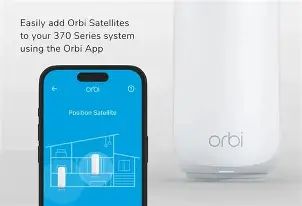
I appreciated the clear LED indicators and the straightforward placement guidance the app offered. What I noticed early on was that placement still mattered: setting the satellite too close to the router gave me marginal gains, and putting it too far meant it couldn't hold the backhaul link reliably. Once I adjusted placement based on the app’s signal map and my own walk-test, coverage became consistent.
Design and hardware notes
Design-wise, the Orbi 370 looks like a modern router — clean lines and a white finish that blends into a living room shelf. In my experience, the units are somewhat tall and not the smallest mesh nodes out there; they do demand a bit of shelf or counter space. The ports are easy to access, and keeping an Ethernet backhaul between the router and satellite is possible if you prefer a wired backbone.
Two small but real grievances: the power cords are on the short side, which forced me to rearrange furniture, and the LEDs are bright enough to be distracting in low-light bedrooms — I found myself covering the light with a slip of paper until I learned how to dim or schedule LEDs in the app (the LED control is available but not immediately obvious).
Software and app experience
I used the Orbi mobile app both on Android and later the web interface. In my experience, the mobile app is well-designed for basic users: network setup, device list, guest network, and a few parental controls are easy to find. The web interface felt more complete for advanced settings.
What I appreciated: the device list is detailed enough to identify most devices by name, and the guest network toggling is instant. Firmware updates are pushed to me and usually installed overnight if I let them — I liked that the router didn’t force me to reconfigure anything after updates.
What bothered me: some advanced settings feel gated or simplified for the typical user. If I wanted granular QoS rules or custom DNS configurations, it took more digging than I expected. The parental controls and content filtering are functional but not as flexible as some third-party solutions I've used previously.
Looking for the best Electronics deals on Amazon?
Shop Amazon →Performance — real-world speed and range
Performance is where the Orbi 370 mostly impressed me. In the same room as the router, I typically saw speeds close to my ISP plan on modern devices — plenty for 4K streaming and large file uploads. In the living room, one floor away and with a couple of walls in between, I consistently got sufficient bandwidth for multiple simultaneous 4K streams while someone else on a laptop was in a video call. In the far bedroom at the edge of coverage, speeds were lower but still usable for HD streaming and video calls.
What I found notable: the system handled device density well. Having smart cameras, phones, tablets, a gaming console, and background IoT devices all active at once didn't produce the usual “stuttering” I used to see with a single router. The mesh handoffs were generally smooth — I rarely noticed a drop when moving from the living room to the dining area with an active video call.
Latency for gaming was acceptable in my tests. I played a few online matches and didn't notice abnormal spikes attributable to the network — the modest lag I did see was typically due to the game server or my ISP, not the Orbi. However, in a few scenarios where a lot of devices were downloading updates simultaneously, I observed that the system’s automatic prioritization could be slow to react; manual QoS helped in those moments.
Reliability and long-term behavior
Over the six months, the Orbi 370 was stable for the most part. I experienced one firmware update that required a manual reboot afterward, and once in rare situations the mesh sat in a degraded state until I power-cycled the satellite. Those events were infrequent, but when they happened, they were annoying. Netgear’s push updates improved stability in later releases — I noticed fewer hiccups after the third monthly firmware release.
I also appreciated the uptime statistics in the web UI: they let me confirm whether an outage was local or ISP-related. In my experience, the Orbi more often stayed online while my ISP had a brief outage, which reinforced my trust in its resilience.
Advanced features and real-life use cases
If you like to tinker, you’ll find some advanced options to be useful: manual channel selection, guest network customization, and VLAN options for separating smart home devices. I used the Ethernet backhaul option for my basement gaming node, which made a noticeable difference for devices in that area.
One feature I leaned on was the network map and per-device pause control for when kids needed to take breaks. The controls are responsive and work well from the app. I also used scheduled LED sleep and automatic firmware updates to minimize hands-on maintenance.
What I missed
- Deeper built-in traffic analytics — I wanted historical graphs for bandwidth by device beyond the last 24 hours.
- A simpler way to export logs for troubleshooting without using SSH or contacting support.
- More granular parental rules (time blocks by day and device are there, but the interface could be faster).
Pros & Cons
- Pros:
- Consistent coverage across a multi-floor home in my testing
- Reliable handling of many simultaneous devices
- Easy initial setup with a user-friendly app
- Wired Ethernet backhaul option for better stability
- Regular firmware updates improved stability over time
- Cons:
- Bulky physical footprint and short power cords
- Some advanced settings are hidden or simplified
- LED brightness can be distracting unless scheduled off
- Occasional need to power-cycle a satellite after updates
- Limited historical traffic analytics in the app
Comparison — Orbi 370 vs similar systems
Below is a simple comparison table focused on real-world factors I care about: coverage reliability, suitability for streaming/gaming, ease of setup, and best-use case. These are based on my hands-on experience with the Orbi 370 and familiarity with other mesh systems I’ve tested.
| Product | Coverage & Reliability (my experience) | Best for | Main difference I noticed |
|---|---|---|---|
| Orbi 370 | Very consistent across 2 floors; good at handling many devices | Households needing stable multi-device performance | Balanced between ease-of-use and reliable mesh handoffs |
| High-end Orbi (benchmark) | Even wider coverage and higher sustained throughput | Large homes with heavy 4K streaming and many wired devices | Higher raw performance but at a premium price |
| Competitor mesh (value-tier) | Good coverage for price but sometimes inconsistent under heavy load | Smaller homes or budget-conscious buyers | Lower price, fewer advanced features and less-polished app |
Buying guide — who should consider the Orbi 370?
When I decided whether to keep the Orbi 370 or return it, I narrowed the decision to a few practical factors that I think will help you decide:
Find top-rated Electronics products at great prices.
Shop Amazon →1. Home size and layout
In my experience, the Orbi 370 is a strong fit for two-story homes up to around 2,500–3,000 sq ft when nodes are placed sensibly. If you have long, masonry-heavy walls or a very large property, you may need extra nodes or a higher-tier Orbi model for truly gap-free coverage.
2. Number of active devices
If your household has many devices — phones, tablets, smart TVs, cameras, and smart home gear — the Orbi 370 handles device density better than the single-point routers I used previously. I regularly had a dozen active devices and saw stable performance.
3. Do you need wired backhaul?
I recommend using Ethernet backhaul if you can run a cable between nodes. I tried both wireless mesh backhaul and a wired backhaul for my basement node; the wired option reduced latency and gave consistently higher throughput, which made gaming and large file transfers snappier.
4. Are you a power user?
If you want deep analytics, historical bandwidth graphs, or highly granular QoS controls, be aware some advanced features are present but not as in-depth as third-party firmware or enterprise gear. For most families and prosumers I tested with, the Orbi's capabilities were adequate.
5. Budget and alternatives
Consider whether you prefer to spend a bit more for higher-tier models that provide extra coverage or raw throughput. If your priority is a minimal budget, there are value-tier mesh systems that will cover a smaller home; but in my experience, they don't match Orbi’s reliability under heavier device loads.
Maintenance tips from my experience
- Place the satellite one room beyond the area where the router still has strong signal — that usually gives the best balance between coverage and backhaul quality.
- Schedule firmware updates for overnight and enable automatic reboots if you see recurring connectivity blips.
- Use Ethernet backhaul for fixed, high-demand nodes (gaming, NAS, desktop) where possible.
- Turn off or schedule LEDs if the node sits in a bedroom — it’s an easy fix that improves night comfort.
- Label devices in the app when you set them up — it makes per-device controls far more usable.
Final thoughts
After using the Orbi 370 for several months, I can say that the hype is mostly justified if what you value is reliable, household-wide Wi‑Fi without constant tinkering. In my experience, its strengths are steady coverage, good multi-client performance, and a setup process that just works for daily users. I particularly appreciated how it handled simultaneous 4K streaming, video calls, and smart home traffic without noticeably slowing down.
However, the system isn't perfect. I was disappointed by the occasional need to power-cycle a satellite after certain updates, the somewhat bulky design, and the limited depth of built-in analytics. If you’re a network enthusiast who wants fine-grained control and historical reporting, you may find the Orbi 370 a bit too consumer-focused. If instead you want a “set it and forget it” mesh that performs well in real life, this system performed admirably for me.
Would I buy it again? Given my current needs — a busy household with lots of streaming and smart devices — yes. The Orbi 370 struck the balance I actually wanted: it made day-to-day internet use feel noticeably smoother without demanding a lot of time to manage. If you prioritize rock-solid coverage and stability over the deepest configuration options, I think it’s worth serious consideration.